







Big Bass Splash Win In France: User Manual
Benchmarks for playing Big Bass Splash in France, estimating the pace, setting budget and limits, and managing withdrawals without pressure.
What The Max Win Means In This Slot
Talking about “max win” is a dream, but it's not a button to activate. It's a theoretical ceiling, rarely reached, that describes what the game can produce in a very favorable scenario. The important point is not to chase this ceiling, but to understand what this idea does to your behavior: it can push you to bet too high, too fast, and for too long.
Imagine the situation: you start a session “just to see”, then you find yourself extending it because you think “the big hit” can come at any moment. Most players then start to change their bet at the slightest emotion. A simple framework avoids this drift: you set a duration, a starting bet, and a stopping point, then you respect these three elements.
One last useful benchmark: big results often come from an alignment of mechanics and timing, not from a “moment when the game becomes generous”. If you are tired, rushed, or distracted, it is rarely the right context to attempt a long session. In France, play in an adult-only manner and in compliance with applicable rules - this also means knowing how to close the application without justification.
Why Records Make You Lose Track
Records tell a spectacular story, but your session is an ordinary story. When you compare yourself to a screenshot or an anecdote, you forget the reality: your budget, your time, your risk tolerance. This discrepancy creates frustration, and frustration is one of the most expensive drivers in a casino.
Imagine a player who sees a “huge win” in a video, then wants to reproduce the scene in an hour. Often, they increase the bet too early, then try to “catch up” after a bad streak. The right reflex is the opposite: you use these stories as entertainment, not as a game plan.
Choose A Bet That Doesn't Unsettle You
The ideal bet is not one that “makes numbers”, it's one that lets you breathe. A bet that's too high turns every spin into a stressful decision. Conversely, a stable bet allows you to follow your plan, take breaks, and not confuse play with tension.
Imagine you start too high and after ten minutes you already feel the pressure. Most players then drop sharply, then go back up, then drop again, and lose all consistency. A better method is to start low, keep the same bet for a block of spins, then adjust only once if your budget remains comfortable.
You can also “smooth” your session into blocks: a trial block (to warm up), a game block (to stay in rhythm), then an exit block (to close cleanly). It's simple, but it works, especially on mobile where time flies.
All promotional incentive structure is clearly stated in writing and/or via electronic means in an easily understood manner. All codes are accompanied by an explanation of what the code is for, who is eligible to use the code, and how it should be used. As such, players are less likely to be confused about what is required of them in order to receive a reward and how the reward will be applied after receiving it. The promotional incentives provided to participants provide them with time to become familiar with the gaming system's mechanics, their interface, and progress, before deciding how deeply they wish to become involved with this platform. Therefore, players are encouraged to participate in an informed manner, rather than being pressured or tempted to act quickly.
Big Bass Splash Big Win: What It Really Means
The fantasy of the “big win” hides a reality: the game often distributes unevenly, with calm phases and more favorable phases. Understanding this dynamic helps you avoid two mistakes: believing that everything must happen quickly, and believing that a bad streak “must” be followed by a good one.
Imagine the scene: you have a good run, you increase your bet “to take advantage,” then the run stops. Many players react by insisting, as if the game “owed” them something. A mature approach is to do the opposite: when things are going well, you protect your budget; when things are not going so well, you slow down or stop.
In France, the best use remains one that keeps the session under control. This means: a budget set before playing, known limits, and the ability to take a break when emotions run high. Entertainment must remain a choice, not an automatic response.
Reading Sequences Without Seeking Justice
A game of chance is not a judge. It does not reward effort, it does not punish patience, it does not “rebalance” because you have waited. If you look for moral logic in the results, you risk staying too long.
Imagine you're having a series of neutral rounds and you tell yourself, “it’s bound to turn around.” Often, this phrase is the beginning of a session that goes awry. The right reflex is to refocus on what you control: remaining time, remaining budget, and current mood. If your mood isn't good, a break is worth more than one more round.
Starting In France With A Clean Account
A well-managed account makes gaming smoother, especially when it comes to deposits, withdrawals, and support. It's not an “administrative” formality; it's a way to avoid surprises. If your information is consistent, if you know where to find your history, and if your device is secure, you gain peace of mind.
Imagine you register on mobile during a break and leave the screen before final confirmation. Most players return later with a doubt: “Is it validated?” Result: they start over, make mistakes, or get annoyed. Complete the registration in one go, then test a reconnection after closing the application. It seems trivial, but it saves you a lot of friction.
In 2026, the most useful habit is a quick pre-session check: accessible profile, visible limits, and chosen payment method. In France, this is part of a practice reserved for adults, with real attention to responsible gaming.
Setting Limits Before The First Round
Limits are only effective if they exist before emotion sets in. As soon as you are “in” the session, your brain looks for justifications to continue. A budget limit and a time limit turn exiting into a simple action, not an internal debate.
Imagine you lose a few rounds and feel the urge to “push a bit.” This is exactly when the limit protects you. If you haven't set anything, you negotiate with yourself. If you have set it, you apply it.
Also vary the form of your breaks: a two-minute break, a complete app shutdown, or stopping for the day if you're frustrated. The goal isn't to deprive yourself, but to stay in control.
Payments And Withdrawals Without Complication
The principle is simple: one action, one confirmation, then the next. On mobile, the most common trap is repetition due to stress: you don't see the immediate update, you start over, and you create a confusing history.
Imagine you deposit on an average network, then your phone receives a call. You come back and no longer know where you are. The useful routine is always the same: open the account history, check the status, then decide. As long as it's not clear, you don't add a second action.
For withdrawals, the logic is identical, with an added bonus of caution: avoid last-minute changes to your profile. Modifying information at the same time as a withdrawal request can trigger additional checks. Do things one after another, calmly.
Choosing A Consistent Payment Method
The best payment method is not “the fastest on paper,” it’s the one you understand and can follow. Consistency simplifies everything: the same method throughout the session, visible confirmations, readable history.
Imagine you try a new method “just to see” and can't find the confirmation. Many players get annoyed and repeat actions. Instead, choose a familiar method, confirm once, then play. You'll always have time to experiment another day, not when you want a stable session.
|
Step |
What You Check |
Useful Reflex |
To Avoid |
|
Before Deposit |
Expected amount and daily budget |
Decide on a single deposit |
“I'll add more later” |
|
After Deposit |
Status confirmed in history |
Wait for update |
Repeat out of nervousness |
|
During Session |
Remaining time and stable bet |
Take a planned break |
Change everything at once |
|
Withdrawal Request |
Consistent profile and available balance |
Request without time pressure |
Edit profile just before |
|
In Case Of Concern |
Time, screen, action and status |
Write a factual message |
Multiple and vague messages |
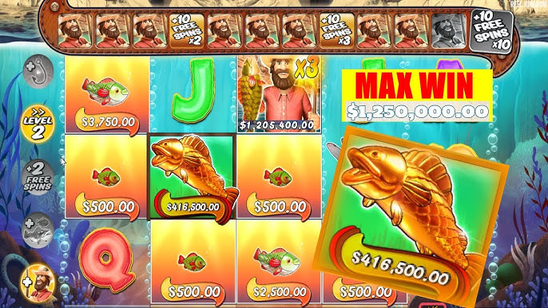
Max Win Big Bass Splash: Scenarios And Expectations
Behind the idea of “maximum win” lies a more useful question: is your session built to withstand variance? Because this game, like many slots, can alternate between calm periods and more favorable moments. If your budget cannot tolerate a bad streak, you will be tempted to compensate. And compensating is often the gateway to making the wrong choice.
Imagine a session where you start well, then the pace flattens out. Many players interpret this phase as a provocation and increase their bet “to wake up the game.” The reality is simpler: the game doesn't wake up on demand. What you can do, however, is adapt your session to avoid this lull.
Start by defining your real goal. Are you looking for a short session for entertainment? In that case, your success is to finish on time and within budget. Do you want to explore the game longer? Then your priority becomes rhythm management: stable betting, breaks, and a clear exit.
Also think about your state. Fatigue, stress, impatience, distraction - all of these influence your ability to stay disciplined. A volatile game becomes more difficult when you are already tense. In these moments, the adult decision is to reduce the intensity: shorter session, lower bet, or complete stop.
In France, keep to the usual framework: reserved for adults, and compliant with applicable rules. This includes the use of limits and the possibility of temporary self-exclusion if you feel you are losing control. It's not dramatic, it's a protection.
Finally, remember a simple point: big results are rare by definition. If you base your pleasure solely on the exception, you condemn yourself to being frustrated most of the time. If you base your pleasure on a well-managed session, you gain stability.
Session Plan To Avoid Panic Mode
A working plan consists of three lines: a starting bet, a duration, and a maximum budget. You can add a break rule, for example after a negative streak or after a certain time. This is enough to avoid “panic mode,” where you make decisions instead of following a strategy.
Imagine you feel the urge to change your bet every two minutes. This is often a sign that your plan no longer exists. Take a short break, go back to the menu, reread your limits, then decide: either you resume with the same bet, or you stop. The goal is to regain consistency.
When To Take A Break Or Self-Exclude
A break is useful as soon as you play to “correct” an emotion. Frustration, desire for revenge, excessive excitement - these are signals, not instructions. A five-minute break can be enough to break the impulse.
Imagine you catch yourself saying “just one more” several times in a row. Most slips start exactly like that. Close the app, change activities, and only come back if you can define a new framework. If you can't, temporary self-exclusion or timeout are adult tools, designed to protect your budget and well-being.
Support, Security, and Mobile Habits
Good support helps especially when you provide facts. And good security prevents most problems before they even arise. On mobile, the challenge is twofold: protecting your account and avoiding handling errors (too-fast clicks, session left open, borrowed phone).
Imagine you have a doubt about an operation and you send "it's not working" without context. Often, you'll receive a list of questions, and the resolution drags on. Conversely, a clear and structured message speeds everything up: what you wanted to do, what you did, what you saw, and approximately at what time.
On the security side, the rule is basic but effective: strong password, screen lock, and log out after the session if the device is shared. Most problems don't come from a spectacular attack, but from a moment of inattention.
Short Message That Provides an Answer
A useful message looks like a mini-sheet: action, screen, approximate time, visible status, and device used. No need for a novel, no need for anger. Support doesn't need your feelings, it needs your context.
Imagine taking thirty seconds to write properly, instead of sending five confused messages. Generally, you save time from the first response, because the other side understands your situation without guessing.
Protecting Your Phone During a Session
Playing on an unlocked phone exposes you to errors. An involuntary gesture can be enough. Lock the screen, avoid sharing the device during a session, and close the app when you're done.
Imagine lending your phone for "two minutes" and someone accidentally touches a button. You come back, you doubt, and you lose track. Logging out after a session avoids this scenario, and it's an easy adult habit to adopt.
FAQ
How to interpret a win cap without putting pressure on myself?
Consider it as design information, not as a goal to be achieved in one session. Imagine you're playing short and looking for an exceptional result: you'll naturally speed up, change your bet, and extend. The right benchmark is the opposite: define a budget and a duration, then judge your session based on your control and comfort, not on a rare scenario.
How to avoid increasing the bet "to make up for losses"?
Recognize the signal as soon as it arrives. If you feel frustration or urgency, take an immediate break, return to the menu, then review your budget. Imagine you insist despite the emotion: most regretted decisions are made in this state. A simple rule helps: stable bet, end timer, and stop as soon as you are no longer calm.
Which mobile settings reduce handling errors?
Turn off unnecessary notifications, reduce vibrations, adjust brightness, and play on a stable network. Imagine a screen freeze at the wrong moment: clicking everywhere creates more confusion than the freeze itself. Wait, check the status in your history or visible status, then resume only when it's clear.
What to do if I don't see a deposit confirmation?
Don't start over immediately. First, check the account history and the operation status, then wait a short period if the display is delayed. Imagine you make another deposit out of stress: you risk ending up with multiple transactions and an evening that turns into an investigation. A single calm check is better than a second impulsive action.
How to prepare a withdrawal to avoid complications?
Do it at a time when you're not rushed. Check the available balance, ensure your profile is consistent, then send a single request. Imagine you change your information just before: this can trigger checks and frustrate you. The adult method is to anticipate and do things one after another.
What to write to support for quick help?
Write factually: attempted action, affected screen, approximate time, observed status, and device type. Imagine a vague message: it triggers questions, then back-and-forth. A short but complete message gives support everything they need to understand and respond usefully.
When is it best to stop the session completely?
When you're no longer focused, when the urge to "catch up" takes over, or when you exceed the scheduled time. Imagine the phrase "just one more" repeated several times: it's a signal that impulse is driving. Close the application, get some fresh air, and come back another day with a simple plan, reserved for adults and compliant with the rules applicable in France.